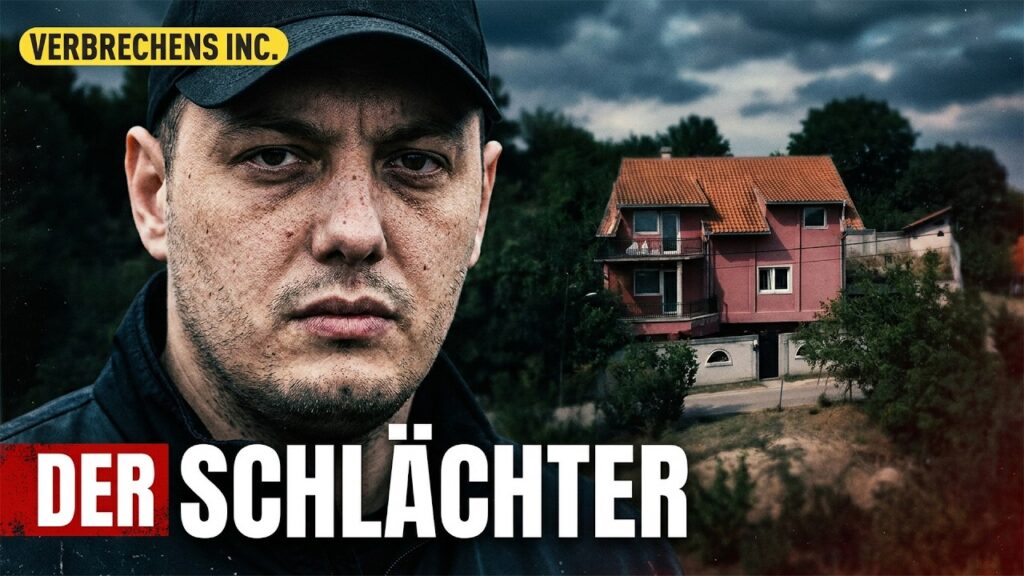
In a quiet suburb of Belgrade, an ordinary-looking family home concealed one of the most disturbing crime scenes uncovered in Europe. Behind a hidden door in the garage, investigators found a secret room and an industrial meat grinder. According to the prosecution, the room was used by a criminal organization to torture and murder captives before attempting to destroy every trace of them.
The discovery was shocking not only because of the alleged violence, but because of the method. The group did not simply seek to kill its enemies. It sought to make them disappear. Yet the plan eventually failed for an unexpected reason: the perpetrators had recorded and shared evidence of their own crimes through an encrypted communications network.
A Hooligan Group Becomes a Criminal Organization
At the center of the case was Veljko Belivuk, a Serbian underworld figure who emerged from Belgrade’s football-hooligan scene. In the Balkans, such groups have often served as recruitment grounds for organized crime. They offer more than a shared identity in the stands: members may develop networks, discipline, a reputation for violence, and a strict culture of silence.
Belivuk’s group, known as Principi, was publicly associated with the supporters’ culture of Partizan Belgrade. Investigators, however, described it as a structured criminal unit. Its members trained together, knew one another well, and could divide responsibilities between surveillance, transport, intimidation, and the disposal of evidence.
Principi was also tied to a much larger conflict. The group acted on behalf of the Kavač clan, a Montenegrin organization involved in the international cocaine trade. Kavač had once cooperated with the rival Škaljari clan, but a missing drug shipment reportedly shattered the alliance. The resulting feud became one of Europe’s most violent criminal conflicts.
Killings and attempted killings linked to the rivalry spread across several countries, including Serbia, Montenegro, Spain, Austria, Germany, and Greece. Cars exploded, gunmen attacked targets in public, and members of both factions hunted one another across borders. Belivuk’s organization was allegedly used to locate, abduct, interrogate, and kill members or associates of the opposing side.
The Logic of “No Body, No Crime”
Every recovered body creates investigative opportunities. A corpse can provide DNA, ballistic evidence, information about the cause of death, and clues about where the victim was last seen. Witnesses may remember a vehicle or recognize a suspect. For a group trying to operate without detection, the existence of a body is a continuing threat.
The solution attributed to Belivuk’s organization was to conceal evidence of the alleged killings. Prosecutors described the house outside Belgrade as a location where victims were taken and subjected to fatal violence. The alleged efforts to destroy evidence became a significant part of the investigation.
The process was not described as a spontaneous act of violence. Evidence presented by prosecutors and testimony from cooperating witnesses portrayed a repeated sequence: surveillance, deception, abduction, confinement, torture, murder, disposal, and documentation. Different people allegedly handled different stages, giving the operation the character of a system rather than an isolated series of attacks.
The First Known Victim
According to investigators, the first known victim was not an enemy from the rival clan but a longtime associate of the group. Belivuk allegedly suspected that the man was passing information to the opposing side. Whether that suspicion was justified has not been conclusively established. The case illustrates the danger inside organizations built on fear: suspicion alone can become a death sentence.
Security cameras reportedly recorded several members entering the house, including Belivuk, before being turned off. Investigators also described mobile-phone records and witness testimony concerning the alleged fatal abuse of a victim. Those records became part of the prosecution’s case.
The alleged disposal method was then put into practice. Rather than burying or burning the body, the group sought to ensure that the victim could not be recovered. The hidden room and its equipment were therefore not incidental features of the crime scene; prosecutors argued that they were part of a plan designed in advance.
Abduction by Deception
Later alleged victims were often approached through someone they knew or trusted. A meeting might be arranged around a weapons deal, an introduction, or a shared acquaintance. Instead of being seized in a public place, the target would enter a vehicle voluntarily, believing that he was going to meet friends or business contacts.
In one alleged case, a member of the Škaljari network was invited to discuss a weapons transaction. The acquaintance who arranged the meeting was, investigators said, already working for Belivuk’s organization. When the target arrived, several men were waiting. He was overpowered, restrained, placed in a van, and taken to the house.
The group allegedly photographed a victim during the journey and after arrival. Investigators said images were shared with associates and, in one reported instance, with the opposing organization. The purpose was intimidation: a demonstration that the group could reach people close to its enemies.
Another alleged victim was personally close to one of the group’s members. That relationship made the deception easier. The victim followed an invitation into the house without realizing that his death had allegedly already been decided. Prosecutors and witnesses described a recurring contrast: casual conversation and laughter on one side, and planned violence on the other.
Encrypted Messages Become Evidence
The organization believed that its most important safeguard was its communications technology. Members used Sky ECC devices, specialized phones marketed around strong encryption and privacy. Criminal networks across Europe relied on the system to discuss drug shipments, weapons, money laundering, and violence.
European law-enforcement agencies eventually gained access to the network. In 2020, investigators began reading millions of encrypted messages. The material transformed cases that had previously depended on fragments of evidence. Chats contained plans, locations, photographs, logistical instructions, and conversations written by people who believed they were communicating in complete secrecy.
Photographs allegedly connected to the Belgrade house became an important part of the investigation. Some investigators initially considered whether the images could be staged or fabricated. Verification came through details that matched the digital material to the physical world—vehicles, roads, faces, locations, and GPS information.
The messages also helped investigators identify people who had previously appeared only as anonymous usernames. They could follow discussions about surveillance, arrange the movements of victims, and observe how participants reacted after killings. The group’s own communications supplied a chronology and connected individuals to the alleged operation.
The 2021 Raid
In February 2021, Serbian police raided the house in Belgrade. From the outside, it still appeared to be an unremarkable suburban property. Inside, officers discovered the concealed door and the room that had previously been known to them through decrypted images. The industrial grinder remained in place.
The raid turned digital evidence into a physical crime scene. The suspects had allegedly believed that their victims had been erased, but the communications preserved what the group had tried to destroy. The arrests marked a major blow against one of Serbia’s most feared criminal organizations and brought the alleged crimes into the public record.
Questions About Official Protection
The case soon moved beyond the alleged murders. Belivuk had been known to Serbian authorities for years as the leader of a highly violent hooligan faction. His associates had been linked in public reporting to brawls, extortion, and drug trafficking. Critics asked how the group could operate for so long and why earlier proceedings against Belivuk had sometimes been unexpectedly discontinued.
Journalists and opposition figures had previously raised questions about possible links between the group and influential officials. A police report that became public in 2017 described alleged contact between Belivuk and a senior police officer. Serbian media later circulated an audio recording said to document a meeting involving the officer and members of the group. The authenticity and significance of the recording were disputed, and it did not lead to publicly established legal consequences for the officer.
During court proceedings, Belivuk made further allegations. He claimed that his organization had worked for state interests, received assignments, and benefited from political protection. He named Serbian President Aleksandar Vučić. The government rejected the accusations, and the president denied any connection to the group. No independent evidence has conclusively substantiated Belivuk’s claims. Government representatives have argued that he was attempting to shift responsibility for his own alleged crimes.
Those unresolved allegations created a second dimension to the trial. The proceedings became a test not only of the evidence against the defendants, but also of how organized crime, political power, and state institutions may interact in Serbia. The public debate remains intense because the question of possible protection cannot be answered solely by examining the hidden room.
A Case Still Without a Final Verdict
Belivuk and most of his co-defendants deny the murder allegations. The trial has continued, and at the time covered by the available case record, no final legally binding verdict had been issued. That distinction matters. The existence of the room, the encrypted messages, the photographs, and witness testimony are significant elements of the prosecution’s case, but allegations remain allegations until resolved by a final judgment.
Even without a final verdict, the investigation changed the understanding of organized crime in Europe. It showed how a criminal group could use an existing feud, a recruitment network, and a secure location to create a repeatable system of violence. It also demonstrated that the same technology criminals trusted for secrecy could preserve a detailed record of their activities.
The Digital Trail That Survived
Belivuk’s organization allegedly pursued the perfect murder: no body, no witness, and no recoverable evidence. The strategy depended on two assumptions—that the victims could be made to disappear and that encrypted communications would remain private.
Both assumptions failed. The physical evidence remained hidden only temporarily, while the digital record outlived the people who created it. Messages and images connected planning to execution, linked anonymous accounts to real identities, and led investigators to a house that otherwise looked ordinary.
The broader lesson is not limited to one Serbian criminal network. Across Europe, law-enforcement agencies used the compromise of Sky ECC to investigate drug trafficking, contract killings, weapons dealing, and money laundering. A communications platform that had promised criminals near-total security instead became a source of evidence against them.
The Belgrade house therefore stands as more than a symbol of brutality. It is also a warning about confidence—confidence in violence, in silence, in political connections, and in technology. The organization’s alleged crimes were designed to leave no trace. In the end, its own records helped ensure that the trace could not be erased.
A detail we should revisit?
Send a correction or attribution concern with the article URL and supporting evidence.
Contact SwiftLocale ↗