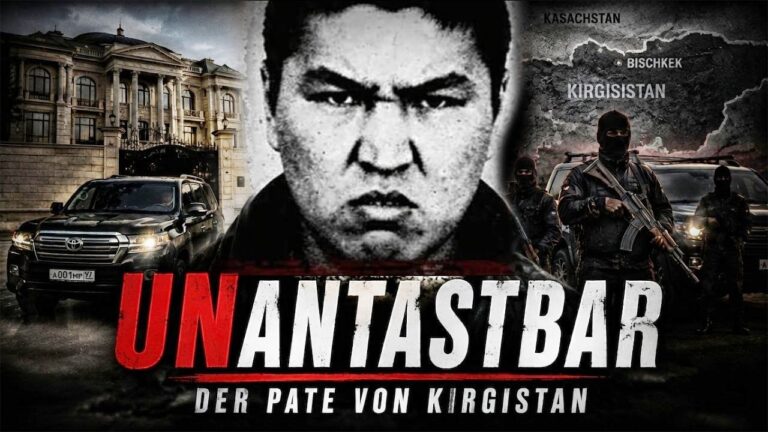
In the chaotic years after the Soviet Union collapsed, Moscow became a battleground where criminal groups, struggling officials, businessmen and former security personnel competed for money and influence. One of the most notorious networks to emerge from that period was associated with Maxim Lasowski, a gangster whose organization became linked to contract killings, armed robberies, stolen oil and alleged protection from figures inside the security establishment.
The story of Lasowski’s network is not simply a tale of organized crime. It is also a portrait of a state in disarray, where military credentials could become criminal tools, oil shipments could finance private armies and a murder in broad daylight could go unanswered.
A Killer Forged by the Post-Soviet Collapse
Andres Schelenkov had once been a captain in the Soviet Army. After the collapse of the Soviet system, thousands of officers lost their income, status and sense of direction. Schelenkov found a new employer in the criminal underworld.
He began by moving stolen cars toward Chechnya. Later, he was sent into conflict zones, where he learned to handle explosives, organize ambushes and kill deliberately. His reputation grew quickly. In one early assignment, he was ordered to shoot a market owner who had refused to pay protection money. Schelenkov killed the wrong man, but in the lawless 1990s such a mistake did little to damage a professional killer’s standing.
His most consequential assignment was the attempted destruction of a railway bridge in Moscow. The operation ended when the bomb carrier was killed by his own device. Investigators found almost nothing intact at the scene except a military identity document, a clue that connected the dead man to a wider criminal structure.
Maxim Lasowski and the Rise of a Private Army
Maxim Lasowski was born in Grozny in 1965 and initially worked for Moscow’s traffic police after serving in the military. That position brought him into contact with the Chechen underworld, which was building an extensive network in the capital.
Lasowski started with forged documents for stolen vehicles, but he soon grasped the central rule of the era: whoever controlled violence controlled business. After a serious car accident left him with a limp, he acquired the nickname “Max the Lame.” The injury did not weaken his authority. Instead, he assembled a fighting group staffed by former soldiers, police officers and special-forces veterans.
Some members reportedly carried forged documents identifying them as military intelligence personnel. In a city where official institutions were weak and identities were difficult to verify, such papers could intimidate rivals, open doors and help perpetrators escape accountability.
Oil, Business and the Economics of Fear
Lasowski soon worked for powerful Chechen bosses in Moscow, including Khozh-Ahmed Nukhaev. Together they established Lanaco, a company that officially dealt in oil and transportation. In practice, the business allegedly provided a channel for large-scale theft while the country’s energy system was being reorganized amid political and economic turmoil.
Chechnya controlled important refineries and transport routes, making oil far more than a commercial commodity. It represented money, leverage and influence during a period when armed conflict and political separation had destabilized the region. Millions of dollars’ worth of shipments disappeared, and money from the trade reportedly passed through the hands of Lasowski and his associates.
One businessman who profited from the oil operations was Vladimir Tolmachov, a former boxing champion and an associate of the organization. When he demanded a larger share, he made what proved to be a fatal mistake. Lasowski told him he would raise the issue with more senior figures. The answer was chilling: if Tolmachov was dissatisfied, he could be replaced.
On October 19, 1992, Roman Polonsky waited for Tolmachov in a Moscow side street. When the businessman arrived, Polonsky opened fire, striking him seven times. The gunman escaped in a waiting car, and no one was arrested.
Robberies and Public Massacres
The network’s activities extended beyond oil. In December 1993, its members learned that employees of a company were transporting approximately 250,000 dollars. Schelenkov and Polonsky followed the vehicle through Moscow before opening fire on a busy street. Two couriers died immediately and a third was seriously wounded. The attackers took the money and disappeared.
A still more brutal episode followed after a dispute over a restaurant connected to the Russian Institute of Physical Culture. Chechen and Dagestani groups both claimed the property. A meeting was scheduled for March 4, but instead of negotiations, Lasowski’s men arrived heavily armed.
They stormed the building and began shooting. People hid beneath tables while others ran into the street. Six people were killed. One man reached his car outside, only to be shot through the side window before he could drive away. The attack demonstrated how quickly a commercial dispute could become a military-style operation in Moscow’s criminal economy.
Enemies Inside the Organization
By 1994, Lasowski’s network was facing pressure from within. Adlan Nataev, one of its important partners, was suspected of stealing money from the oil business. Schelenkov and Polonsky lured him to what he believed was a meeting. Instead, he and two bodyguards were taken to a country house outside Moscow and murdered.
The killers reportedly beheaded the victims and buried their bodies in a peat bog. The remains were not found until years later. When Nataev’s brother came to Moscow to investigate the disappearance, Lasowski allegedly decided that he too had to die.
The resulting confrontation in a parking area involved automatic weapons, grenades and burning vehicles. By the time police arrived, shell casings covered the ground. Roman Polonsky, the organization’s most important executioner, was among the dead. Two months later, Schelenkov died when an explosive device detonated beneath a railway bridge.
Within weeks, Lasowski had lost the two men most closely associated with the network’s violence. The organization’s power began to collapse.
A Prison Sentence That Raised Questions
Lasowski was arrested in 1996 and accused of forming a criminal organization, commissioning murders and organizing bomb attacks. The case appeared to threaten one of Moscow’s most feared figures. Then witnesses began withdrawing their statements. Others disappeared. Investigators said they could not guarantee the safety of people willing to testify.
In the end, Lasowski was convicted only on an illegal-weapons charge and received a two-year sentence. The outcome astonished many investigators. After his release, he reinvented himself publicly as a respectable businessman. He bought a luxury home outside Moscow and established a foundation devoted to peace in the Caucasus.
Behind the scenes, some investigators continued to follow the same trail: Lanaco, the oil trade and Lasowski’s name. The apparent transformation did not erase the questions surrounding the organization or the officials and businessmen who had benefited from its activities.
The Assassination of Lasowski
In the spring of 2000, authorities prepared to arrest Lasowski again. On April 28, however, an unknown attacker reached him first.
Lasowski had just stepped out of his car near the Uspensky Cathedral outside Moscow when a gunman emerged from the shadows and fired an entire submachine-gun magazine. Lasowski collapsed. The killer placed his body on a bench and left the weapon beside him, turning the murder into a deliberate message.
No one has been officially identified as having ordered the killing. The method suggested that the assassination was not merely a personal act of revenge. It looked like a warning aimed at a wider circle of people who understood the criminal and political relationships surrounding Lasowski.
Connections to the Security Services
One of the darkest names associated with the case was Anatoly Trofimov, a former FSB general who had once ranked among Moscow’s most powerful security officials. Investigators from the city’s criminal police later claimed that several FSB officers had maintained regular contact with Lasowski’s group and that some may have actively protected it.
Those allegations did not become the central issue in court. Trofimov eventually left government service and entered the private-security business, but he too was later murdered.
On April 10, 2005, Trofimov returned home with his partner. A masked gunman emerged from the darkness and fired suppressed shots. Both victims were fatally wounded within seconds. The attacker calmly left in a waiting car. The murder remains unsolved.
What the Network Reveals
The Lasowski story shows how organized crime thrived in the institutional vacuum of the 1990s. Former officers brought military skills into criminal groups. Business fronts turned stolen resources into legitimate-looking revenue. Corrupt officials and frightened witnesses weakened the justice system. Political connections made it possible for violent men to survive arrests, trials and public scrutiny.
Many of the principal actors are dead. Others vanished, changed identities or entered respectable businesses. Some may have continued living without facing consequences. Yet the legacy of the period remains visible in the way criminal wealth, private force and state power became intertwined.
The violence was not an isolated gang war. It was a struggle over who would control money, territory and the institutions of the state itself.
A detail we should revisit?
Send a correction or attribution concern with the article URL and supporting evidence.
Contact SwiftLocale ↗