On 22 February 1992, a prisoner transport moving through Kazakhstan became the starting point of an escape that quickly turned into a deadly hostage crisis. Six Uzbek repeat offenders sentenced to death were being transferred under guard when a lapse in routine security gave them an opening. Within hours, they had weapons, a commandeered bus, and a plan that threatened the lives of everyone caught inside it.
A dangerous concession on the prison train
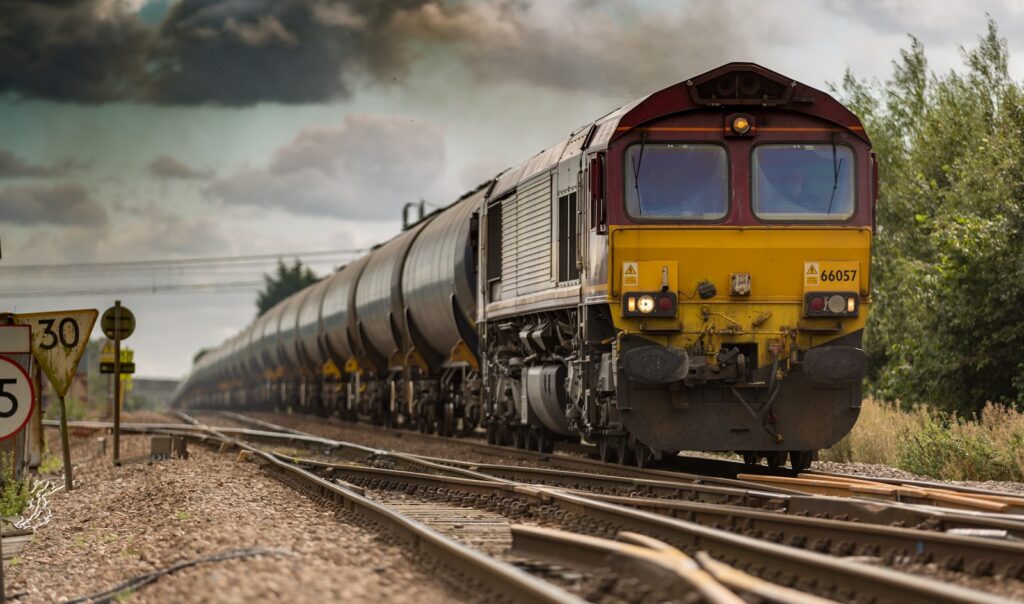
The prisoners were held in specially equipped cells attached to a post and freight train. A woman was confined separately, and the men persuaded a young conscript, Aldar Nazarov, to let her join them for conversation. The decision violated transport rules, but the soldier agreed.
When the escort commander discovered what had happened, Nazarov feared serious punishment. Instead of keeping the matter to himself, he told the prisoners about the confrontation and asked for help. They recognized his fear and offered what sounded like a solution: they would stage an escape, receive a weapon, and allow him to recapture them. His conduct would then appear courageous rather than negligent.
The proposal was a deception. Nazarov handed over his Makarov pistol and opened the cell door. Sergei Glushkov and Gennady Usov immediately turned the supposed rehearsal into a genuine takeover. They rushed the escort compartment, restrained the commander, seized additional weapons, and disarmed the remaining guards.
From train escape to bus hijacking
The fugitives pulled the emergency brake and waited until the train had slowed enough to leave. They disappeared into the darkness beside the railway, but freedom was still far away. They were outside the cities, carrying firearms and lacking transport.
Their reported destination was Almaty, where they hoped to disappear among the crowds. After walking along the tracks, they reached a road and flagged down an Ikarus route bus. At first, the armed men looked like ordinary passengers, although some witnesses noticed that their clothing resembled prison garments.
The situation changed when passengers began leaving at a stop. One fugitive blocked the exit and produced a pistol. The bus had become a moving hostage scene. The driver managed to alert traffic police, and local officers prepared to intercept the vehicle near Chili.
The first gunfight
When the bus stopped, a police captain attempted to overpower the first fugitive who stepped out. Glushkov opened fire, fatally wounding the officer. Police returned fire. One of the escapees was seriously injured and died, while two others were captured.
Only Glushkov and Usov remained aboard with the hostages. Surrounded and unable to continue by road, they began issuing demands. They wanted an IL-76 transport aircraft with a loading ramp so the bus could be driven directly inside. They also demanded money and safe passage to a southern country, threatening to kill passengers if the authorities refused.
Authorities choose time over force
Senior officials from Kazakhstan’s Interior Ministry and security service established an operational command. A special group, including personnel associated with the Soviet-era Alpha unit, was sent to the scene.
Negotiators understood that immediate surrender was unlikely. Their first priority was to keep the prisoners talking. Food was provided, while demands for vodka and cognac were rejected. A proposal to drug the food was also abandoned because no one could guarantee that the hostage-takers would eat first—or that they would not force a hostage to test it.
Instead, officials agreed to move the bus toward Chimkent. The concession was tactical. An assault on an open road or at a crowded bus station could have caused mass casualties. At the airport, planners could control the surroundings, position the assault teams, and select the exact point where the vehicle would be stopped.
Rehearsing an assault measured in seconds
At Chimkent Airport, the special forces obtained another Ikarus bus and spent roughly two hours rehearsing the operation. They practiced entering through doors and broken windows, moving down the narrow aisle, covering the hostages, and engaging the gunmen at extremely close range.
The central difficulty was the distance between the attackers and the passengers. Automatic fire could easily strike an innocent person. The orders were therefore strict: a shot could be fired only when a gunman was clearly exposed. If a child stood in the line of fire, a soldier was expected to shield the child with his own body before engaging.
The airport entrance was prepared as the trap. A heavy road-cleaning truck would block the bus at a calculated point, while assault teams waited behind cover. Controllers planned the spacing of escort vehicles and monitored every movement from the air-traffic-control tower.
The drivers who kept the crisis moving
The bus driver eventually broke under the pressure. During a pause, he escaped and pleaded for his release, explaining that he had five children. Negotiators persuaded him to return because a replacement driver might have alerted the fugitives and triggered an immediate reaction.
Later, near Turkistan, he tried again. He claimed the bus was nearly out of fuel, stopped to inspect the engine, and ran. The hostage-takers then ordered traffic officers to find another driver. A 45-year-old truck driver, Alexander Chonin, agreed to take the wheel after learning about the danger.
Chonin’s calmness became an unexpected part of the operation. He reportedly created small delays by claiming that animals had crossed the road or by making other controlled stops. Each pause gave negotiators and assault teams more time to prepare while keeping the fugitives convinced that they were still being taken to an aircraft.
The airport ambush
By the evening of 23 February, the bus reached Chimkent Airport after nearly twelve hours of negotiations. The authorities had never promised an actual aircraft, but they had avoided openly rejecting the demands. From inside the bus, the arrangement appeared to be proceeding as requested.
When the vehicle passed through the airport gate, Chonin guided it to the predetermined position. On a concealed signal, the road-cleaning truck moved into its path and stopped it. The assault began immediately.
Special forces shouted an order meaning “get down” in Kazakh, then threw a stun grenade into the bus. Smoke and the flash disoriented the passengers. As people ducked between the seats, officers entered from several directions along the routes practiced during the rehearsal.
Glushkov reacted first, turning toward the driver and raising his pistol. The shot grazed Chonin’s left temple. Almost simultaneously, automatic fire struck Glushkov, killing him. Usov attempted to resist, but he was shot moments later. The confrontation ended within seconds.
Eleven hostages survive
Once the gunfire stopped, officers removed the passengers from the bus. Two people suffered minor injuries: Chonin was grazed by the gunman’s bullet, and an elderly passenger was wounded in the leg. No hostage was killed.
The operation’s outcome reflected the deliberate pace that preceded it. Twelve hours of negotiation, intensive preparation, and a carefully timed roadblock prevented a chaotic assault in a crowded public place. The authorities had accepted the appearance of compliance in order to move the crisis to a location where they could act with greater control.
A legacy inside Kazakhstan’s security services
The operation, later associated with the code name “Alarm,” was studied by Kazakhstan’s security agencies. Its lessons shaped the training of later special units, including the formation that became known as Arystan.
For years, some of the participants received little public recognition. In 2021, the special-forces personnel involved were awarded state decorations for bravery. The operation remained notable not because it ended with a dramatic assault, but because the planning kept eleven hostages alive during a crisis that began with a single breach of prison-transport procedure.
A detail we should revisit?
Send a correction or attribution concern with the article URL and supporting evidence.
Contact SwiftLocale ↗