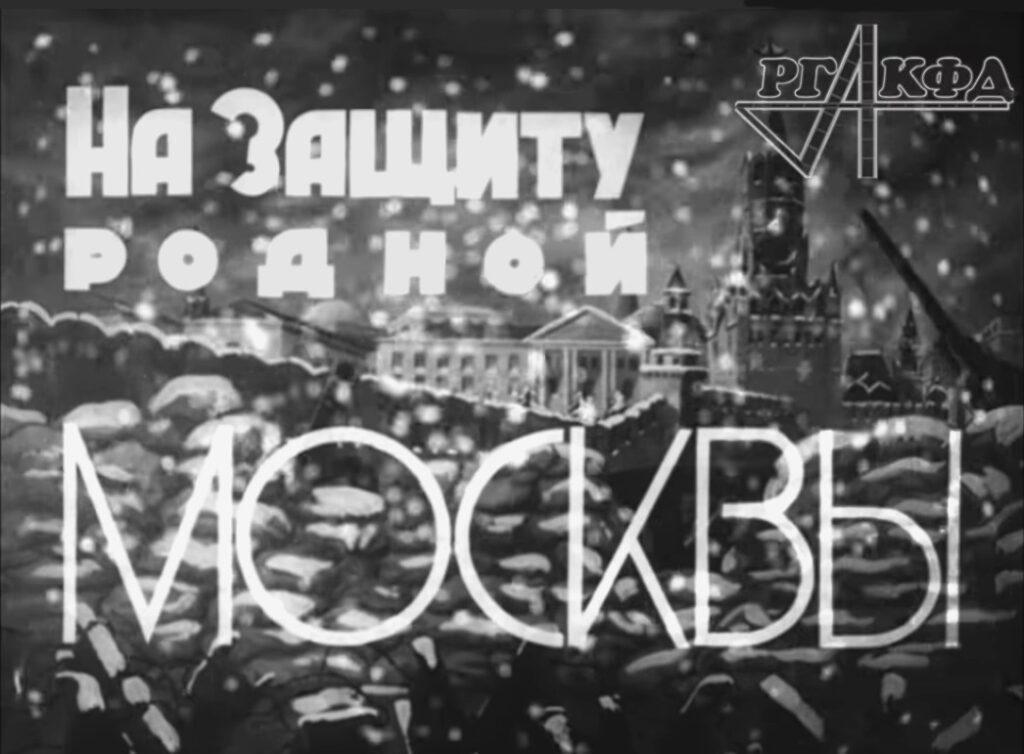
In the autumn of 1941, Moscow lived under the pressure of siege. German forces stood dangerously close to the capital, air raids threatened the population, and rumors traveled faster than reliable news. Against this background, an older criminal legend seemed to return: pale, floating figures appearing at night, frightening pedestrians, and vanishing before anyone could understand what had happened.
The apparitions wore loose white garments and seemed almost bodiless. Some victims collapsed in terror; others surrendered money, clothing, and valuables without resistance. To frightened residents, the figures might have been German agents, restless dead, or something born from the city’s mounting desperation. Investigators of the Moscow criminal police, however, recognized a familiar technique. The attackers were known as the “Hoppers,” criminals who used theatrical costumes and carefully staged fear as a weapon.
A Criminal Spectacle Born in Petrograd
The Hoppers’ story reached back to Petrograd in the chaotic years following the revolution. A criminal named Ivan Balgausen—nicknamed “the Living Corpse”—and his associates developed a method that turned a robbery into a supernatural performance. They attached large springs to their feet, wore white clothing, and painted their faces with phosphorescent material. Emerging from dark lanes, they appeared to glide above the ground while waving their arms and terrifying anyone who crossed their path.
The disguise was designed to overwhelm the senses. Victims confronted a glowing, shapeless presence near a cemetery, often at night and in isolated streets. The gang generally avoided direct violence. Fear did the work for them: people handed over cash, jewelry, fur coats, and even the clothes they were wearing. Two victims reportedly died after collapsing from terror and freezing in the snow, but murder was not the gang’s usual objective.
When police eventually searched the group’s hideout, they found evidence of an extensive enterprise, including nearly one hundred fur coats, more than a hundred suits and dresses, and a collection of rings, brooches, and necklaces. The gang was captured in 1920 after detectives spent days posing as wealthy, careless targets in the area where the criminals operated. Balgausen and a close accomplice who manufactured the metal springs were executed; other members received long prison sentences.
The Legend Spreads to Moscow
The method resurfaced in Moscow in the middle of the 1920s near the Vagankovo Cemetery. This later group was more dangerous than its predecessors. Bodies of murdered victims were discovered repeatedly in November and December, forcing the criminal police and security organs to combine their efforts. The gang was broken up in early 1926, and the Hoppers gradually disappeared from public memory.
Nearly sixteen years later, the reports began again. In November 1941, a woman walking near a cemetery found a man lying beside the road. He was well dressed and showed no visible injuries, but he was dead. The medical examination attributed his death to acute cardiac arrest. Investigators concluded that terror may have killed him before his clothing and possessions were taken.
Another case made the pattern impossible to dismiss. A pregnant woman arrived at a maternity hospital repeating that the dead had attacked her. She had fled from white figures that had emerged from the darkness, waving their arms and groaning. In her panic she fell, suffering serious injuries and premature labor. The child did not survive.
Fear as a Tool of Espionage
The investigation took a decisive turn when detectives examined the woman’s husband, an engineer named Mikhail Rosinsky. He reported her disappearance with conspicuous emotion, describing their happy marriage and grieving publicly over the lost child. Experienced investigators found the performance suspicious and placed him under observation.
Rosinsky was soon seen meeting a man dressed as a priest near a cemetery. The supposed clergyman was later caught attempting to send a signal with a flare. He was not a member of the church; the religious clothing was a disguise. The signal was directed toward an industrial district containing factories that produced ammunition and uniforms for the Red Army.
Under questioning, Rosinsky admitted that German intelligence had recruited him before the war. He had passed information about his workplace and later received a broader assignment: spread panic, encourage hostile rumors, and help identify strategic targets for air attacks. To accomplish this, he was told to use criminal elements and revive a frightening episode from Soviet criminal history.
The plan exploited the power of rumor. White-clad figures drifting through the streets could rob isolated pedestrians while simultaneously creating the impression that Moscow was no longer safe. The stolen goods were sold through pawnshops, but material gain was secondary. The real objective was psychological: to make civilians feel surrounded by disorder, helplessness, and an enemy that could appear anywhere after dark.
A Murder Hidden Inside a Disappearance
Rosinsky’s involvement went beyond espionage. He had arranged for criminals to frighten his wife, apparently hoping that the staged attack would kill her. When she survived, he took matters into his own hands. He later confessed that he led her into a park, struck her on the head with a stone, and buried her body. He then reported her missing, apparently calculating that the extraordinary demands of a city under siege would prevent investigators from looking closely.
That calculation failed. Detectives recovered the body and medical examiners found that death had resulted from a severe head injury. When asked what had driven him to kill his wife, Rosinsky gave a chillingly simple answer: she had become an inconvenience. He was sentenced to the highest available punishment for the combined crimes.
The Trap at the Cemetery
Police used the Hoppers’ habits against them. Investigators knew the gang favored the area around a cemetery, so officers spent several days walking there as potential targets. Arrangements were made with the military command so that ordinary patrols would not frighten the criminals away.
One evening, the figures appeared from the darkness as expected. They did not realize that the solitary pedestrian carrying a large suitcase was an undercover officer. When the white-clad attackers approached, he drew his pistol and opened fire. Two Hoppers were killed, and two others were captured by officers who arrived as reinforcements. Among the prisoners was a young former hospital nurse who had remained in Moscow after her workplace was evacuated and had joined the gang.
The episode revealed how criminal theater could be repurposed in wartime. Springs, phosphorescent paint, and white robes had once been tools for ordinary robbery. In a besieged capital, the same devices became instruments of murder, espionage, and mass anxiety. The Hoppers succeeded because they understood a basic truth of psychological warfare: when people are already afraid, a carefully designed illusion can do damage far beyond the immediate crime.
A detail we should revisit?
Send a correction or attribution concern with the article URL and supporting evidence.
Contact SwiftLocale ↗